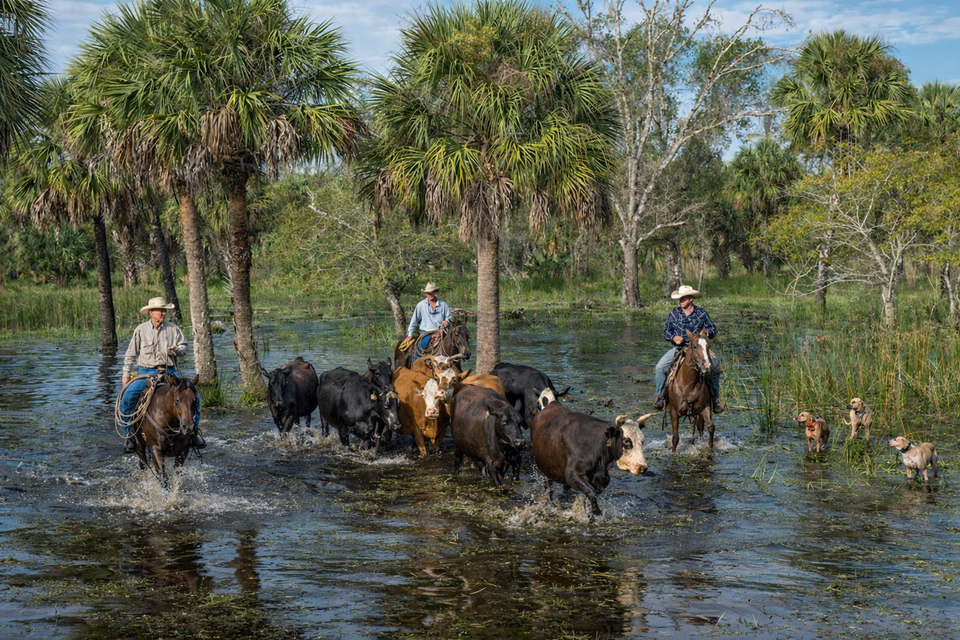
Ranching in Florida runs deeper than most people realize.
Long before subdivisions and highways, this land was cattle country. Open pasture. Wire fences. Saddle horses. Generations of families who understood that stewardship is not optional — it is inherited.
At FLA WILD, ranching represents discipline, responsibility, and long-term thinking. It is early mornings checking fence lines. It is moving cattle before a storm. It is improving soil, protecting water, and managing pasture so the land produces year after year.
Florida ranching is not flashy. It is foundational.
From South Florida’s historic cattle operations to Central Florida pastureland and working ranches across the state, this culture built the backbone of rural communities. Ranching feeds families. It supports local economies. And when done right, it protects wildlife habitat alongside livestock production.
Ranching teaches patience. It builds resilience. It demands integrity.
The land gives back when you take care of it. This is hard work that earns rest. This is legacy built with intention.
This is Ranching FLA WILD.
Florida Cattle Ranching Facts
America’s first cattle state Cattle were introduced to North America through Florida in 1521 by Spanish explorer Juan Ponce de León—making Florida the birthplace of the U.S. beef industry.
One of the largest cow-calf states in the country Florida consistently ranks Top 10–12 nationally for beef cows, with 1+ million head of cattle and nearly 15,000 ranching operations statewide.
Cow-calf capital of the Southeast Florida is primarily a cow-calf state, producing calves that are shipped across the U.S. to feedlots—Florida genetics help stock herds nationwide.
Ranching predates statehood by centuries Florida ranches have been operating continuously for over 500 years, longer than any other agricultural system in the United States.
Home of the Florida Cracker cattle The Florida Cracker is one of the oldest cattle breeds in America—small, heat-tolerant, disease-resistant, and uniquely adapted to swamps, palmettos, and subtropical conditions.
Ranching protects land, not just beef supply Florida cattle ranches preserve millions of acres of open space, acting as critical buffers against overdevelopment and protecting wildlife corridors and watersheds.
Environmental stewards by necessity Ranchers actively manage land through prescribed burning, rotational grazing, and water management, practices that improve native grasses and reduce invasive species.
A major economic engine The cattle industry contributes billions annually to Florida’s economy and supports tens of thousands of jobs—from veterinarians and feed suppliers to trucking and processing.
Built for Florida’s toughest conditions Florida ranchers operate in heat, humidity, floods, hurricanes, insects, and predators—making resilience and grit non-negotiable traits.
Still family-run The vast majority of Florida ranches are multi-generation family operations, not corporate feedlots—values, work ethic, and land stewardship are passed down, not outsourced.
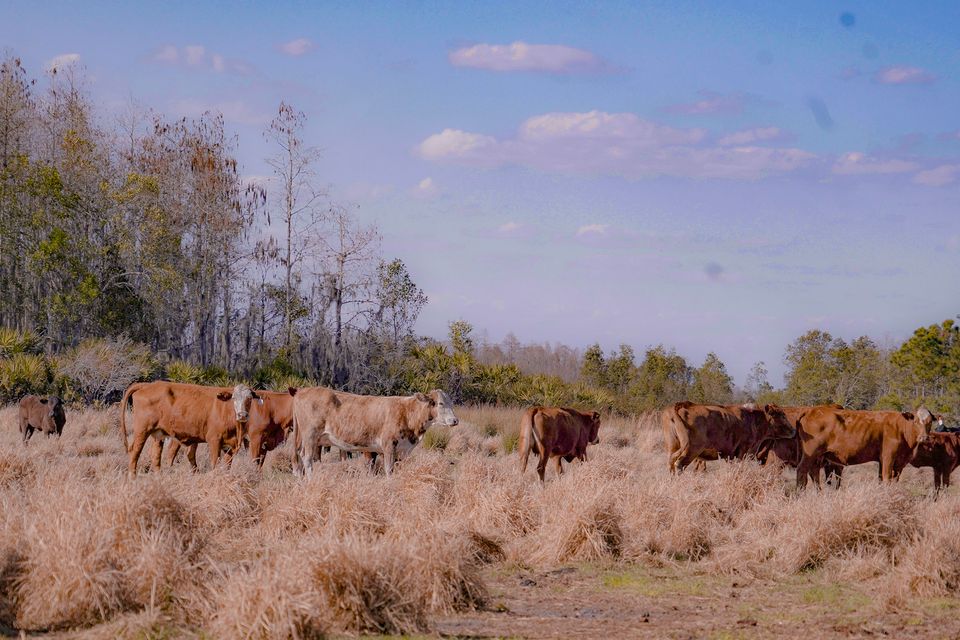
Florida Cracker Cow Breed
Centuries ago, cattle from southern Spain carried a unique genetic signature to the Americas, forming the foundation of the criollo cattle family. The Florida Cracker emerged from this lineage, carrying DNA markers that set it apart from modern European and Spanish breeds. Those original genetic traits have largely disappeared in Europe, making the Florida Cracker—and a small number of related criollo breeds—the last living link to this important ancestral bloodline. By the mid-1900s, most pure Florida Cracker cattle had been absorbed into crossbreeding programs. They were first crossed with Brahman cattle, and later with British and European breeds. The Florida Cracker provided the hardiness, maternal strength, and environmental adaptability that made these programs successful. Its wide genetic distance from other breeds also produced exceptional hybrid vigor in the offspring. Yet the success was credited to the so-called “improved” breeds. The Florida Cracker was dismissed as outdated—nearly lost to history. It survived only because a handful of Florida ranch families, resistant to abandoning tradition, quietly preserved the breed in its pure form. Their commitment ensured that this living piece of Florida’s ranching heritage did not disappear.